

The people who love DECA the most are the ones who go all in. They don’t just show up—they compete to win. They embrace the pressure, push themselves past comfort, and never look back.
I know because I became one of them.
I’ve always been competitive. Whether it’s family game night, a test score, or a tennis match, I’m the one who celebrates hard when I win and takes losing personally (not that it happens often). So when I first joined DECA, I thought I’d bring that same fire—except, I didn’t. My first year, I played it safe. I didn’t expect to go far, so I let that mindset decide how much effort I gave.
That changed fast.
By my second year, I was all in. Every practice test, every roleplay—I treated them like the real thing. I wanted to make it past state and onto the big stage: ICDC. Sure, the prestige mattered. But Anaheim was calling, Disneyland rumors were flying, and I had my eyes on the prize.
Districts
Going into sophomore year, I couldn’t stop thinking about the season before—back when Mandy and I were partners. We thought we’d be the perfect team: friends who balanced each other out. And we were… until we weren’t.
At States, it became obvious we weren’t truly collaborating—we were just taking turns. We both had big ideas and both wanted to be the one to deliver them. Sharing the spotlight? Not our strong suit. So for year two, we went solo.
I stuck with the hospitality and tourism category because I loved it—shoutout to all my TTDM competitors. This time, I chose Restaurant and Food Service Management. It was perfect: I love to cook and bake, and I work in a restaurant, so I had real-world experience to bring to the table (pun intended).
Months of prep later, districts arrived. My actual roleplay? Solid. Nothing spectacular, nothing disastrous. What I remember most is the chaos: 2,000 competitors crammed into a waterpark convention center ballroom, one woman barking instructions, everything running late. People panicked over missing ties, practiced in corners, or wandered looking lost. I competed for 30 minutes and spent the other eight hours waiting.
Still, I left with a medal and my ticket to States—so worth it.
States
Solo and hungry for more, I headed to States with the rest of my friends. I was the most prepared of us all—back of the bus, headphones in, DECA notebook (notebook #2, for the record), laptop out, still studying on the way to Houston.
States is three days of pure DECA energy:
- Day 1: Opening Session
- Day 2: Competition + Testing
- Day 3: Closing Session + Awards
The sessions? Like a business rave—lights down, lasers flying, music blasting, fog machines running, hype videos on giant screens. Thousands of high schoolers in suits. What kind of club is this? DECA. The real DECA. Not the districts disaster.
But my competition? Brutal. My ideas were good, my prep time was used well—but I was so nervous that I talked at lightning speed. Thirty seconds in, my judge literally stopped me and said, “You need to slow down.” I stumbled through the rest, left embarrassed, and cried in the bathroom. And no, I’m not one of those “I did so bad!” people who wins anyway—I genuinely thought I’d blown it.
The next day at awards, I was sure my medal and ICDC dream were gone. But then they called my name. I had qualified. Anaheim was on.
A quick DECA insider note: Advancing from Texas States isn’t as simple as “top score moves on.” In most events, there are about 100 competitors, split into sections of around 10. Everyone in your section sees the same judge to keep scoring fair. You don’t have to beat all 100 competitors—just the 9 in your section. Sounds like great odds… until you remember that everyone at States already made it through districts.
Competition aside, States is also late-night DoorDash hunts, climbing thirty flights of stairs because the elevator lines are insane, and meeting other DECA kids from all over Texas. It’s chaotic, it’s exhausting, and it’s amazing.
But nothing compares to Internationals.
Internationals (ICDC)
The International Career Development Conference has the biggest build-up ever. Disney + DECA. Thousands of the best competitors in the world. My first ICDC in Anaheim was incredible, but my second year—Orlando—was next level: Disney World AND Universal Studios.
Five days. Back-to-back adrenaline.
- Day 1: Travel + Disney World
- Day 2: Disney World + Opening Session
- Day 3: Testing
- Day 4: Compete + Universal Studios
- Day 5: Finalist Awards + Final Round + Grand Awards
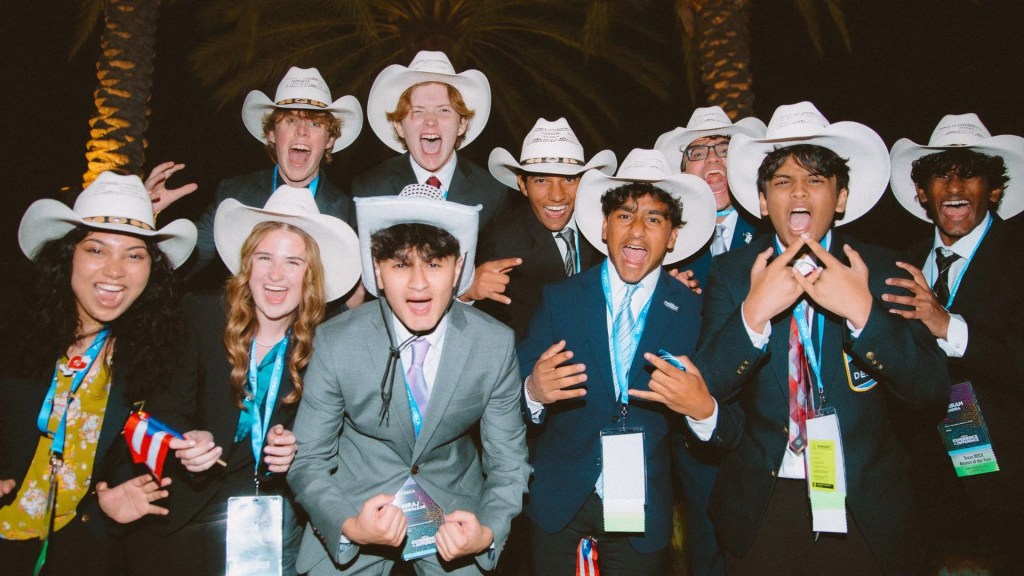
Yes, Universal was closed to the public for DECA kids only—26,000 of us. The lines were still long because, well, 26,000 people. Everywhere we went in Orlando, DECA kids were there, and that was my favorite part. I met competitors from all over the U.S. and beyond. Conversations happened everywhere—before competing, in line for the Velocicoaster, you name it.
And the pins? Each competitor gets pins from their state. Mine was a Texas belt buckle, which I proudly traded “two-for-one” by hyping how rare it was. Classic DECA business skills in action.
How ICDC Works
Like States, you’re split into sections and only compete against the people in your group. The “Finalist Awards” happen before the Grand Awards—where top test scores, top roleplays, and the top two competitors in each section are announced. Those finalists compete again later that same day for DECA glass.
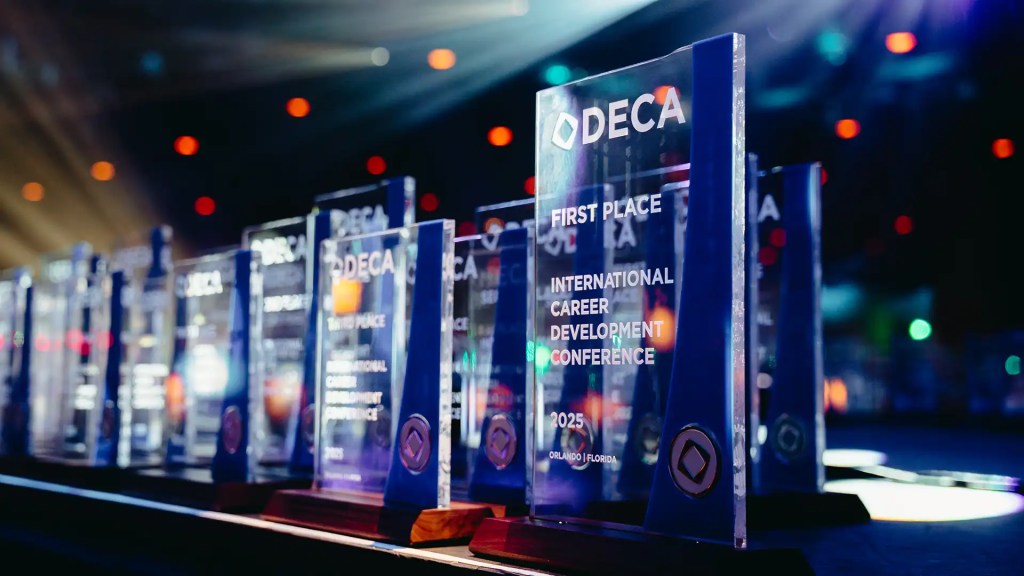
Awards night is long—really long—but the energy is unreal. When they call your name for top 10, you walk the stage. Then they name the top 3, and the glass is yours. Hearing my name called was one of the best moments of my life—people were screaming, hugging, crying. It felt like being on top of the world.
Why It’s Worth It
ICDC was everything they promised and more. And as cringy as it might sound, there really is nothing like DECA. The pressure, the competition, the friendships, the unforgettable chaos—it’s all worth it.






 Mind & Medicine
Leave a reply to Neuro Kid Takes on Business – Mind & Medicine Cancel reply