
You finally have free time. No assignments. No meetings. No notifications demanding something from you.
And instead of feeling relaxed… you feel weirdly uneasy.
Like you should be doing something. Fixing something. Getting ahead on something. Optimizing something.
Why does “doing nothing” sometimes feel more stressful than being busy?
Turns out, your brain is not great at empty space.
The Brain Does Not Like Idle Mode
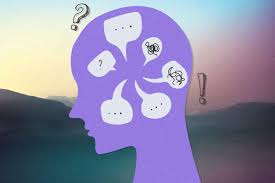
Even when you’re “doing nothing,” your brain absolutely is not.
When you stop actively working on a task, your brain shifts into something called the default mode network (DMN). This network includes areas like the medial prefrontal cortex and posterior cingulate cortex, and it lights up when you’re:
- Daydreaming
- Reflecting
- Thinking about the future
- Replaying the past
- Imagining scenarios
The default mode network is basically your brain’s internal narrator.
Which is great… until it starts spiraling.
Why Your Thoughts Get Loud When You’re Still
When you’re busy, your task-positive network (focused attention system) keeps your brain anchored to what’s in front of you. Solve the problem. Finish the paragraph. Reply to the email.
But when the task disappears, the default mode network steps in.
And here’s the problem: the DMN loves self-evaluation.
It starts asking:
- Am I doing enough?
- Should I be working right now?
- What about that thing I forgot?
- What if I’m falling behind?
So “doing nothing” doesn’t feel neutral. It becomes a breeding ground for internal commentary.
Anxiety Loves Open Space
Anxiety is fundamentally about prediction. Your brain is constantly scanning for possible future threats.
When you’re busy, your cognitive resources are tied up in concrete tasks. There’s less room for hypothetical thinking.
When you’re idle, your brain has spare bandwidth.
And spare bandwidth often becomes:
- Future planning
- Worst-case scenario rehearsal
- Performance comparison
- Subtle self-critique
From a survival standpoint, this makes sense. An idle brain in ancient times meant time to scan for danger.
In modern life, it means scanning for unfinished goals.
Dopamine and Productivity Conditioning
There’s also a chemical layer to this.
Dopamine isn’t just about pleasure. It’s about progress and motivation. Every time you check something off a list, send something in, or get a notification, you get a small dopamine reward.
If your brain gets used to that steady stream of micro-rewards, stillness feels like withdrawal.
No progress.
No checkmark.
No signal that you’re moving forward.
Your brain interprets that as stagnation.
And stagnation feels threatening.
The Achievement Identity Trap
If you’re someone who’s used to being productive, achieving, leading, or performing at a high level, your identity may be partially tied to output.
So when you stop producing, your brain doesn’t just say “rest.” It says:
“Who are you if you’re not achieving right now?”
That thought may not be conscious, but neurologically, your self-referential networks are active. The medial prefrontal cortex connects performance to self-worth more easily than we’d like to admit.
So rest starts to feel like risk.
The Cortisol Connection
When you perceive that you’re “behind” or “not doing enough,” your stress system activates.
The amygdala flags a potential threat (even if it’s just imagined underperformance), and your HPA axis releases cortisol.
Now your body is mildly on edge — not because something is happening, but because something could happen.
This is why you can feel anxious while literally lying on your bed doing nothing.
Your body is responding to predicted stress, not actual stress.
Why Some People Love Doing Nothing
Not everyone gets anxious in stillness.
Research suggests that people with:
- Lower baseline anxiety
- Stronger emotional regulation networks
- More secure self-concept
- Lower stress reactivity
are more comfortable in idle states.
Their default mode network may wander, but it doesn’t spiral.
For others, especially high-achieving or high-responsibility personalities, idle time feels unsafe because the brain associates motion with control.
Your Brain Thinks Productivity = Safety
At a deeper level, productivity signals safety to the brain.
If you’re working, you’re preparing.
If you’re preparing, you’re reducing risk.
If you’re reducing risk, you’re safe.
So when you stop, your brain momentarily loses that safety cue.
It fills the silence with planning, rehearsing, and subtle alarm signals.
It’s not trying to sabotage you.
It’s trying to protect you.
It just doesn’t know when to clock out.
The Irony: Doing Nothing Is Actually Good for Your Brain
Here’s the twist.
The default mode network isn’t evil. It’s crucial for:
- Creativity
- Long-term planning
- Identity formation
- Emotional processing
- Memory consolidation
Moments of “doing nothing” are when your brain integrates everything you’ve been learning and experiencing.
But if anxiety hijacks that space, you don’t get the benefits — you just get rumination.
How to Make Stillness Feel Safer
You don’t have to eliminate productivity identity overnight. But you can retrain your brain.
Try this:
Give rest a boundary.
Instead of “doing nothing forever,” tell your brain, “I’m resting for 30 minutes.” Structure makes idle time feel intentional instead of chaotic.
Name the anxiety.
Literally label it: “This is my brain wanting to feel productive.” Studies show naming emotions reduces amygdala activity.
Lower dopamine intensity.
If your brain is used to constant stimulation, start with low-stakes stillness — a walk without music, quiet journaling, stretching — before full silence.
Redefine productivity.
Rest is not absence of progress. It’s neurological maintenance.
The Honest Part
If doing nothing makes you anxious, it doesn’t mean you’re broken.
It probably means your brain is:
- Highly future-oriented
- Motivated
- Used to operating at high capacity
- Wired to associate movement with security
Which are strengths.
They just need calibration.
The Takeaway (But Make It Gentle)
Your brain doesn’t hate stillness.
It just doesn’t trust it yet.
When you stop moving, your default mode network turns the lights on and starts narrating. Your stress system checks for threats. Your dopamine system wonders where the progress went.
None of that means you shouldn’t rest.
It means your brain needs time to learn that stillness is not danger.
And honestly? That might be one of the most powerful rewiring projects you can give it.






 Mind & Medicine
Leave a comment