
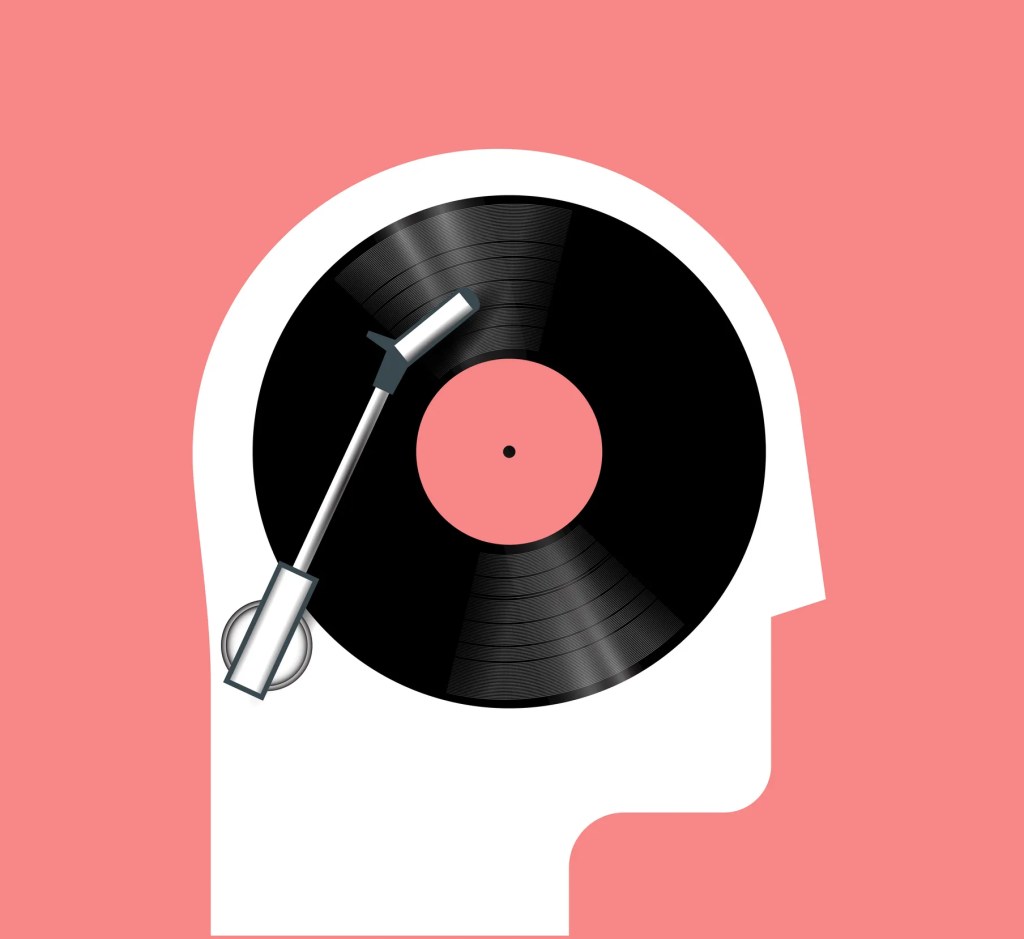
You put your headphones on, press play, and suddenly the world feels different. Your mood shifts. Your energy changes. Sometimes you’re hyped, sometimes emotional, sometimes inexplicably confident walking through Target like you’re in a movie montage.
That’s not just vibes. That’s neuroscience.
Music doesn’t just sound good. It actively changes your brain chemistry in real time. And once you understand how, it makes a lot of sense why one song can ruin you emotionally while another makes you feel unstoppable.
Music Isn’t Background Noise to Your Brain
Your brain does not treat music like background sound. The moment sound waves hit your ears, they’re converted into electrical signals and sent to the auditory cortex. But that’s only the first stop.
Music activates an entire network at once:
- The auditory cortex processes pitch, rhythm, and melody
- The limbic system handles emotion and emotional memory
- The prefrontal cortex interprets meaning and expectation
- Motor areas respond to rhythm (yes, even when you swear you’re not tapping your foot)
That’s why music feels immersive. Your brain isn’t just listening. It’s participating.
Dopamine: The Reason Music Feels So Good
Enter dopamine, the brain’s reward chemical.
Dopamine is released when something feels pleasurable, motivating, or meaningful. Food, social connection, accomplishment, anticipation. Music taps directly into this system.
What’s wild is that dopamine isn’t just released when your favorite part of a song hits. It’s released right before it, during anticipation. The buildup. The pause before the chorus. That moment when you know what’s coming.
So when a song gives you chills, that’s not poetic language. That’s dopamine flooding your reward pathways.
Why Sad Songs Can Still Feel Good
This one feels contradictory until you look at the chemistry.
Sad music activates emotional processing and empathy circuits, but instead of causing distress, it often creates a controlled emotional release. You feel the emotion without being personally threatened.
At the same time, your brain releases chemicals like prolactin and oxytocin, which are associated with comfort, soothing, and connection. So even though the song is sad, your brain makes the experience feel safe.
It’s emotional processing with a safety net. Like crying during a movie instead of about your own life.
Music and Memory: Why Songs Unlock the Past
Ever hear a song and instantly get transported back to a specific moment? A car ride. A summer. A random afternoon that suddenly matters.
That’s because music strongly links the hippocampus (memory) and the amygdala (emotion). When you hear a song during an emotionally charged moment, your brain binds the sound, feeling, and context together.
Later, hearing that song again reactivates the entire network. Not just the memory, but the emotion that came with it.
This is why music is used in dementia care. Even when factual memory fades, musical memory often stays intact. Music embeds itself deeper than facts ever could.
Tempo, Rhythm, and Your Nervous System
Music doesn’t just affect how you feel. It affects how your body functions.
Fast-tempo music increases heart rate, breathing, and alertness. Slow-tempo music activates the parasympathetic nervous system, the one responsible for calm and recovery. Steady rhythms help regulate movement and coordination.
That’s why upbeat music makes workouts feel easier and slow music helps people fall asleep. Your nervous system literally syncs to the rhythm.
Your body entrails to music whether you notice it or not.
Lyrics vs Instrumentals: Why Words Matter
Lyrics activate language centers in the brain, which means they compete with other verbal tasks. That’s why studying with lyrical music can make reading or writing harder.
Emotionally, though, lyrics add narrative. They give the brain meaning to attach to, which strengthens emotional impact and memory encoding.
Instrumental music affects mood without hijacking language systems, which is why it’s often better for focus.
Same music. Different circuits.
Music as Emotional Regulation
People don’t choose music randomly. We use it to regulate our emotions instinctively.
When sad, we often choose music that matches the mood. When stressed, we gravitate toward familiar or calming songs. When we need motivation, we pick high-energy tracks.
Music gives the brain a safe way to process emotion, shift arousal levels, and regain a sense of control.
Your playlists are basically self-directed therapy sessions.
Why Everyone Reacts to Music Differently
Not everyone gets chills. Not everyone cries at songs. And that’s normal.
Differences in musical sensitivity are linked to dopamine receptor density, connectivity between auditory and emotional regions, and personality traits like openness and emotional responsiveness.
Some brains light up intensely with music. Others enjoy it without the same emotional surge. Neither is better. It’s just neurodiversity doing its thing.
Music and Stress Reduction
Listening to music has been shown to lower cortisol levels, reduce blood pressure, and slow heart rate.
This is why music is used in hospitals, therapy settings, and even during surgery. Familiar or preferred music signals safety to the brain, calming the stress response.
So yes, music really can help you relax. That’s not placebo. That’s physiology.
A Final Thought
Music doesn’t just change your mood. It changes how your brain communicates, how your body regulates itself, and how memories get stored and retrieved.
It’s one of the few things that can activate emotion, reward, memory, and movement all at once. Which is probably why it feels so powerful.
So the next time a song completely alters your mood in under three minutes, remember: your brain chemistry just shifted. On purpose. And honestly? That’s kind of amazing.






 Mind & Medicine
Leave a comment