
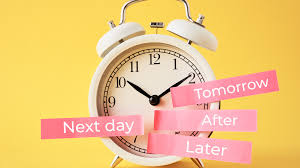
There’s a very specific kind of chaos that happens when you’re “being productive” but somehow doing everything except the one thing you actually need to do.
I’ve mastered it. Truly.
Give me an essay due at midnight, and I’ll suddenly decide my desk must be rearranged, my closet color-coded, and my entire Notion workspace redesigned. My brain convinces me that this is urgent. That it’s essential for success. Which, in a very delusional way, it kind of is.
Welcome to my favorite coping mechanism: productive procrastination.
The Science (or So I Tell Myself)
Let’s be real—procrastination gets a bad rap. But there’s actually some neuroscience behind why we do it. When faced with a task that feels overwhelming or high-stakes, the brain’s limbic system (the emotional decision-maker) takes the wheel and says, “Nope. Too stressful.”
Meanwhile, the prefrontal cortex (the rational part) is like, “Wait, but the deadline—” and the limbic system just hits mute. So instead of tackling the big, scary thing, we find a smaller, easier one to do instead.
Which is how I end up writing to-do lists in 16 different pastel highlighters instead of, say, starting my essay. It’s avoidance disguised as efficiency—and my brain eats it up.
The “At Least I Did Something” Logic
Productive procrastination is dangerous because it feels like progress. You can convince yourself that reorganizing your Google Drive counts as “preparation.” You’re not ignoring your responsibilities—you’re just, you know, optimizing your workflow.
By the time I’m done “prepping” to start, it’s been two hours, three playlists, and one fully cleaned kitchen later. But hey, the vibes are right.
The Procrastination Hierarchy
I’ve realized there’s an unspoken hierarchy to how this works:
- The Core Task – The Big Scary One. Usually academic, important, or slightly soul-crushing.
- The Fake Productive Task – Slightly less urgent, but feels satisfying (emails, laundry, cleaning).
- The Creative Detour – Suddenly you’re designing a logo, journaling, or starting a new playlist.
- The Spiral – You’ve read six articles about how to be more productive and still haven’t started.
Every time I move down the list, my brain gives me a gold star for “doing something,” even if that something is watching a 30-minute video essay on why people procrastinate.
The Weird Upside
Here’s the thing, though—I’ve realized procrastination isn’t always useless. Sometimes it’s a sign your brain needs time to think before doing. When I step away from a big project and do something low-stakes (like running, cleaning, or writing this blog post), I usually come back with more clarity.
That’s called incubation in cognitive psychology: your unconscious mind keeps processing a problem even while you’re not actively working on it. So yes, technically, reorganizing my desk might help me write better essays. That’s my story, and I’m sticking to it.
Turning It Into a Skill (Sort Of)
At some point, I stopped fighting my procrastination and started using it strategically. If I can’t focus on the main task, I’ll channel the energy into something useful: answering emails, prepping NeuroClub slides, or outlining future posts.
Is it the same as “getting it done”? No. But it’s movement. And momentum counts for something.
I’ve also learned to notice the difference between procrastinating out of fear (I’m overwhelmed) and procrastinating out of fatigue (I’m burnt out). The first one usually means I need to break the task down. The second means I need to step away entirely. Both are valid.
The Takeaway (Written at 11:47 p.m.)
So yes, I procrastinate. A lot. But I’m starting to think it’s not the enemy—it’s just a weird, inefficient form of processing.
Because sometimes, the act of “not doing the thing” is exactly what helps you figure out how to do it better.
And if all else fails, at least my Google Drive looks amazing.






 Mind & Medicine
Leave a comment