
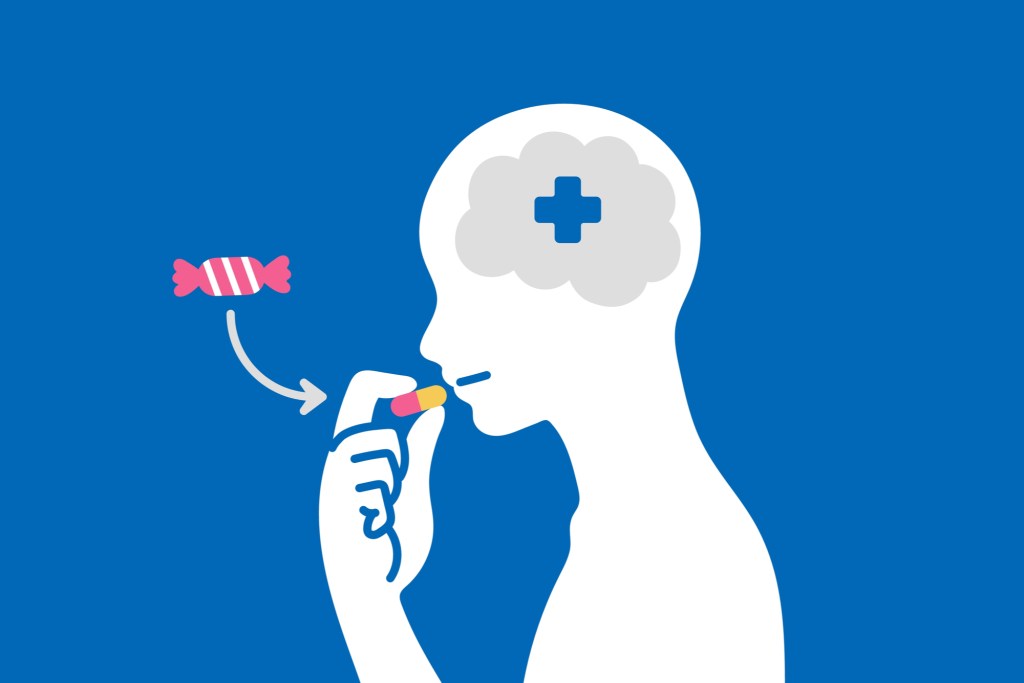
Imagine being given a sugar pill, told it’s the latest cutting-edge medicine, and then—shockingly—you start feeling better. Sounds fake, right? But welcome to the placebo effect, one of the brain’s strangest and most fascinating tricks.
It’s not just “mind over matter” fluff. Neuroscience shows the placebo effect is very real, and it actually changes what’s happening inside your brain and body. So let’s dive in.
What Exactly Is the Placebo Effect?
The placebo effect happens when a patient improves after receiving a treatment with no active ingredient—like a sugar pill, saline injection, or even a sham surgery. The key is that the patient believes the treatment will work, and somehow, that belief alone sparks real physical changes.
Doctors have seen this across conditions: pain relief, depression, Parkinson’s disease, even irritable bowel syndrome. The placebo isn’t “curing” the condition, but the brain is activating healing pathways that reduce symptoms.
A Quick History Lesson
The term “placebo” comes from Latin for “I will please,” and doctors have known about the effect for centuries. Back in the 1700s, physicians sometimes prescribed sugar pills knowingly, figuring that if it worked, why not?
It wasn’t until the mid-20th century that the placebo effect became a central part of science. Today, every new drug trial uses a placebo control group—because otherwise, we wouldn’t know if a treatment actually worked or if the brain just tricked itself into improvement.
The Brain Chemistry Behind It
So how does belief translate into biology? Here’s where neuroscience gets cool:
- Endorphins: Placebos can trigger the release of natural opioids in the brain, reducing pain much like morphine would. In fact, studies show placebo pain relief can be reversed if you block opioid receptors.
- Dopamine: In Parkinson’s patients, placebos have been shown to increase dopamine release in the striatum, temporarily improving motor function.
- Expectation pathways: The prefrontal cortex (decision-making) and anterior cingulate cortex (attention/emotion regulation) communicate with pain and reward circuits. If you expect to feel better, your brain literally shifts resources toward making that expectation a reality.
Belief isn’t just “thinking positive.” It’s chemistry.
The Pain Connection
Pain is one of the clearest areas where placebos shine. If you think you’ve been given a powerful painkiller, your brain ramps up endorphin release, lowering pain signals.
In one famous study, patients given a saline injection (told it was morphine) experienced measurable pain relief. Their brains lit up in the same areas as those given actual morphine. The only difference? One was salt water.
Beyond Pills: Open-Label Placebos
Here’s the wildest part: placebos can work even when people know they’re placebos.
“Open-label” studies have given patients sugar pills with full honesty—This is a placebo. It doesn’t contain active medicine. But research shows placebos can help, and taking them may still improve your symptoms.
And guess what? People still got better. That suggests the ritual of treatment—taking a pill, following a doctor’s advice—can itself activate healing pathways, even without deception.
Student Life Example
You’ve probably experienced the placebo effect without realizing it. Ever drink decaf coffee thinking it’s the real thing and suddenly feel more awake? Or wear “lucky socks” to a test and somehow perform better because you believed they’d help?
That’s placebo at work: your belief rewires your body’s response.
The Dark Twin: Nocebo Effect
If belief can heal, belief can also harm. The nocebo effect happens when negative expectations cause worse symptoms. For example, patients told a drug might cause headaches often develop headaches—even if the pill was a placebo.
It’s your brain flipping the script: expecting harm, so it produces harm-like symptoms.
The Limits of Placebo
Important caveat: the placebo effect doesn’t cure everything. It won’t shrink tumors, fix broken bones, or eliminate infections. Its strength is in symptom management—pain, fatigue, mood, stress.
Think of it as the brain’s ability to turn the volume knob down on discomfort, not rebuild an entire engine.
Why Doctors Take It Seriously
The placebo effect used to be brushed off as fake healing. But now, researchers see it as proof of the brain’s power in medicine. Placebos highlight the importance of context:
- A doctor’s confidence matters. Patients improve more when physicians deliver treatments with positivity and empathy.
- Ritual matters. Taking a pill, getting an injection, or following a routine reinforces the brain’s “I’m healing” expectation.
- Environment matters. Clinical settings themselves prime the brain for recovery.
Medicine isn’t just molecules—it’s psychology and neuroscience working together.
Can We Hack the Placebo Effect?
Here’s the million-dollar question: if our brains can create these changes, can we intentionally use placebo power in daily life?
The answer: sort of. You can’t trick yourself into thinking sugar pills are antibiotics. But you can lean into the brain-body connection:
- Routines: Creating rituals around health behaviors (like a consistent bedtime tea) reinforces the brain’s expectation of rest.
- Mindset: Believing in the effectiveness of exercise, meditation, or therapy strengthens their real benefits.
- Environment: Surrounding yourself with supportive, positive settings primes your brain for improvement.
Basically, the placebo effect teaches us that belief amplifies biology.
The Big Picture
The placebo effect isn’t “fake healing.” It’s real healing, powered by expectation and brain chemistry. Your mind doesn’t cure disease by itself, but it can shape how your body responds, sometimes in powerful ways.
So next time you hear about sugar pills making people feel better, remember: it’s not nonsense. It’s neuroscience. And it proves that your brain isn’t just reacting to medicine—it’s an active player in the healing process.






 Mind & Medicine
Leave a comment