
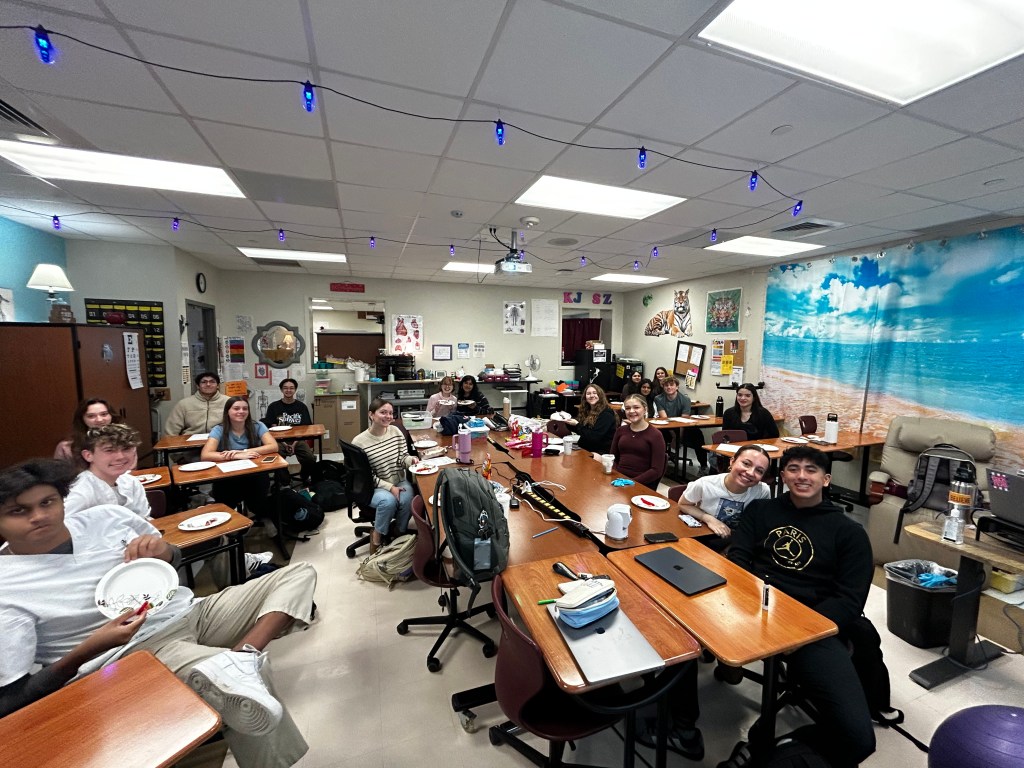
It’s official: I started a club. Not just any club—NeuroClub.
This wasn’t a decision I made lightly (okay, maybe it was). But here we are, January of junior year, and I now have the title “Founder and President” of a club that didn’t even exist two months ago. Which sounds very impressive on paper, but in reality mostly means I’m running around campus convincing people that the brain is cool while also bribing them with Oreos.
The Idea
It started in AP Psych. I was sitting there, absolutely geeking out over neurons, and then it hit me: this is it? One class? For the organ that controls literally everything we do? The brain deserved better.
So naturally, I thought: what if I just… made something? A club where people could ask ridiculous but real questions like:
- Why do habits feel automatic?
- What’s actually happening in our heads when we can’t fall asleep?
- Is TikTok frying our prefrontal cortex?
NeuroClub was born—at least in the notes app on my phone.
The Bureaucracy
Here’s the glamorous truth about starting a club: it’s 10% inspiration and 90% paperwork. I had to find a teacher sponsor (shoutout to the real ones), draft a constitution, and sit through multiple “Wait, what exactly is neuroscience again?” conversations in the front office.
Admin’s questions were fair. Neuroscience is kind of biology, kind of psychology, kind of medicine, kind of “trust me, it’s a real field.” But eventually, they approved it. And suddenly, it was real.
The First Meeting (aka the Oreo Bribery Plan)
I’ll be honest—I thought no one would show up. I’d made Canva slides, a sign-up QR code, and laid out Oreos on the desk like it was a baited trap.
People trickled in. Some were genuinely curious. Others had clearly just heard the word “snacks.”
I started with a slide that said What Is Neuroscience? and immediately felt like I was auditioning for “AP Psych: The Sequel.” My voice cracked, the projector glitched, and I was sweating like it was cross country practice. The room was silent in that way that makes you want to drop out and join the circus.
But then someone laughed. Someone asked a question. And by the time we wrapped up, people were actually leaning in. It wasn’t perfect, but it was something. And I realized maybe this could work.
The Recruitment Struggle
Running a brand-new club also means learning how to shamelessly advertise yourself. Picture me in the hallway, borderline begging: “Hey, you like science? You like brains? You like Oreos? Come to NeuroClub.” Half the time people ignored me. The other half, they said “Wait, what’s neuroscience again?” (I should really put that on a T-shirt at this point.)
What’s Next
We’re in the baby stages, but I have big plans:
- NeuroLabs: small experiments we can actually pull off without burning down the school.
- Brain Bee prep: yes, there’s a competition for neuroscience. Yes, I’m dragging everyone into it.
- Outreach days: explaining the brain to younger kids. Which will definitely go great until someone asks me if brains taste like chicken.
It’s messy, but it’s exciting.
What I’ve Learned (Already)
- Snacks are non-negotiable. People come for the Oreos, stay for the serotonin.
- You don’t need to know everything—you just need to care enough to make it fun.
- “Founder and President” sounds cool, but really it means staying up way too late making Kahoots about neurotransmitters.
- High school is weird. The brain is weirder. But somehow, talking about both in the same room just works.
The Beginning of Something
So yeah—NeuroClub is real. It’s small, it’s awkward, it’s just starting out. But it exists. And sometimes that’s the hardest part: just starting.
Maybe we’ll grow. Maybe we’ll compete. Maybe we’ll just eat Oreos and argue about whether dreams mean anything. Either way, the brain finally has a place at my school.
And for January, I’m calling that a win.




 Mind & Medicine
Leave a comment