
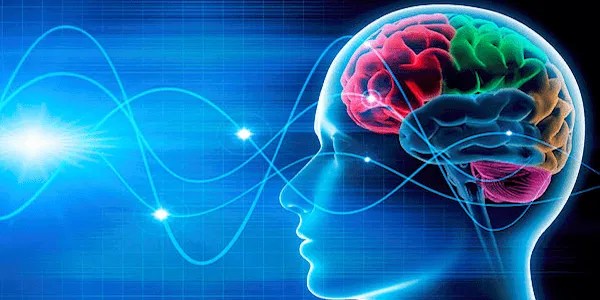
Here’s a hot take: your brain is way more flexible than you think. And no, I don’t mean “flexible” like doing yoga headstands (though respect if you can). I mean flexible in the sense that it can literally rewire itself—changing how it works based on what you do, learn, or experience.
That ability is called neuroplasticity, and it’s basically your brain’s built-in life hack for growth, recovery, and adaptation.
So… What Actually Is Neuroplasticity?
Neuroplasticity is the brain’s ability to reorganize itself by forming new neural connections. Think of it as your brain being less like a concrete sidewalk (poured once, stuck forever) and more like a trail system in the woods. The more you walk a path, the clearer it gets. Stop using a trail, and eventually the weeds take over.
Every skill you learn, every habit you build, every experience you go through leaves a footprint in your brain’s wiring. Some trails strengthen, others fade. That’s plasticity in action.
The Science-y Side (Without the Jargon Overload)
Here’s what’s happening behind the scenes:
- Synaptic plasticity: Neurons that “fire together, wire together.” When two neurons repeatedly activate at the same time, the connection between them gets stronger. (This is why practicing vocab 20 times makes recall faster.)
- Structural plasticity: Your brain can physically change. Dendrites grow more branches, synapses multiply, even gray matter density shifts depending on what you practice.
- Functional reorganization: If one brain region gets damaged, another can sometimes take over its job. (This is why stroke patients can relearn how to walk or speak.)
The wild part? This isn’t just a childhood thing. For a long time, scientists thought adult brains were basically “set in stone.” Now we know they stay plastic your whole life—just a little slower than in kids.
A Quick History Detour
For most of the 20th century, the consensus was that brains developed in childhood and then… froze. By adulthood, your circuits were supposedly permanent. This belief shaped everything from education systems to rehab practices—people thought recovery past a certain age was nearly impossible.
Then came a wave of research in the 1960s–2000s that blew the doors off that idea. Psychologists like Donald Hebb proposed that “neurons that fire together wire together.” Later, brain imaging confirmed it: adults who learned new skills showed measurable changes in brain structure. Even stroke survivors could regain lost functions through training.
In other words, the brain never really stops learning—it just needs the right push.
Everyday Examples of Neuroplasticity
You don’t have to be a neuroscientist to spot neuroplasticity in your own life. It’s happening constantly:
- Learning an instrument: Musicians literally show larger and more connected motor cortex regions controlling their fingers.
- Studying for exams: Repeated review strengthens memory circuits in the hippocampus. (Yes, those AP Chem flashcards are actually remodeling your brain.)
- Sports practice: Rehearsing a tennis serve over and over creates motor programs that make it automatic.
- Breaking habits: Quitting TikTok scrolling at midnight requires your brain to weaken one pathway and build a new one.
- Recovery from injury: Physical therapy teaches the brain to recruit new circuits when old ones are damaged.
One famous study even found that London taxi drivers, who have to memorize every street in the city for “The Knowledge,” developed enlarged hippocampi compared to non-taxi drivers. That’s neuroplasticity in 3D.
The “Use It or Lose It” Rule
Here’s the catch: plasticity isn’t always positive. Your brain will happily strengthen any pathway you repeat, good or bad.
- Scroll TikTok every night at 1 a.m.? That’s reinforcing.
- Practice procrastinating instead of studying? Yup, reinforcing.
- Constant negative self-talk? Unfortunately, your brain can make that its default, too.
Neuroplasticity is neutral—it just follows repetition. The responsibility (and the opportunity) is in what you choose to wire.
Neuroplasticity and Healing
One of the most inspiring areas of research is how neuroplasticity helps people recover after brain injury.
- Stroke rehab: Therapists use repetitive movement training to coax new brain areas into taking over damaged functions. Patients who couldn’t speak sometimes relearn words as other circuits pick up the slack.
- Phantom limb pain: Mirror therapy tricks the brain into “seeing” movement in a missing limb, rewiring pain circuits and reducing discomfort.
- Trauma therapy: Techniques like EMDR (eye movement desensitization and reprocessing) are thought to tap into neuroplastic mechanisms to help reprocess painful memories.
These stories show that while plasticity isn’t instant magic, it’s powerful enough to rebuild lives piece by piece.
Can You “Hack” Neuroplasticity?
Short answer: kind of, yes. Scientists have found ways to boost plasticity, and honestly, they’re things you’ve probably heard before (but now you know why they work):
- Sleep: Consolidates new connections. Basically, your hippocampus does its best rewiring overnight.
- Exercise: Increases BDNF (brain-derived neurotrophic factor), a protein that helps neurons grow and survive.
- Mindfulness/meditation: Strengthens prefrontal cortex control while shrinking overactive amygdala circuits. Translation: more calm, less freak-out.
- Deliberate practice: The whole “10,000 hours” idea works because repetition drives plasticity.
- Healthy challenge: Learning new languages, puzzles, or skills keeps brain pathways active and flexible.
So yes—you can train your brain to be sharper. But you can also train it into bad habits just as easily.
The Dark Side of Plasticity
Of course, not all rewiring is good. Chronic stress, addiction, and anxiety disorders are also products of neuroplasticity.
- Addiction: Drugs hijack reward circuits, reinforcing them until the brain screams “more” at every cue. Imaging studies show that even seeing paraphernalia can light up those circuits.
- Chronic pain: Sometimes pain pathways become so reinforced that the brain keeps firing “hurt” signals even when the original injury is gone.
- Stress: Constant cortisol reshapes the hippocampus and amygdala, making it harder to regulate emotions. This is one reason chronic stress can feel like a mental rut you can’t climb out of.
Plasticity isn’t automatically your friend—it just follows where your attention, energy, and habits go.
Why This Matters
The idea that our thoughts and routines are physically sculpting our brain wiring is both empowering and a little terrifying. Like, yes, you can build resilience, learn new skills, and get smarter—but you can also hardwire yourself into procrastination or constant worry if that’s what you practice.
The hopeful part? Nothing’s permanent. The same pathways that reinforce stress or distraction can be reshaped into healthier ones. It takes effort and repetition, but the brain never completely closes the door on change.
So the next time you catch yourself saying, “I’ll never get better at this” or “I’m just wired this way,” remember: your brain disagrees. Every flashcard you review, every lap you run, every moment you choose focus over distraction is quite literally altering your circuitry.
You’re not stuck—you’re still under construction. And honestly, that’s one of the coolest things about being human.






 Mind & Medicine
Leave a comment