
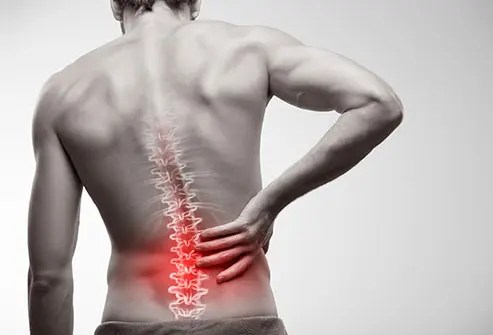
Imagine stubbing your toe on the corner of your bed frame. Now imagine… not feeling it. No sharp throb, no hopping around clutching your foot, no muffled scream into the pillow. For most of us, pain is a very real (and very annoying) part of life. But for a tiny number of people, pain just… doesn’t exist.
This condition is called congenital insensitivity to pain (CIP), and while it might sound like a superpower, it’s actually one of the most dangerous disorders you can have. Let’s unpack why.
Pain: The Signal We Love to Hate
Here’s the thing—pain is awful, but it’s also essential. Pain is basically your body’s alarm system. It tells you:
- Move your hand off the hot stove before you melt it.
- Stop running on that sprained ankle or you’ll make it worse.
- Something is wrong inside your body—go get help.
Without pain, you wouldn’t know when you’re injured. You wouldn’t feel an infection brewing or realize you’ve broken a bone. And that’s where the mystery comes in: the people who can’t feel pain don’t just live more “comfortable” lives—they live more dangerous ones.
The Real-Life Case
One of the most famous people with CIP is Ashlyn Blocker, a girl from Georgia who made headlines as “the girl who feels no pain.” Ashlyn can feel touch, texture, and temperature shifts, but never the burn of a hot pan or the ache of a broken bone.
Her parents first realized something was wrong when she was a baby. Ashlyn didn’t cry when she scraped her knee. She didn’t flinch when she touched a hot surface. Once, she developed a severe eye infection because she kept rubbing her eye raw—without realizing it hurt.
Doctors diagnosed her with CIP, and suddenly her family’s entire world changed. They had to hover constantly, not because she was fragile, but because her body wouldn’t tell her when something was seriously wrong. As her mom put it: “It’s not that she doesn’t get hurt—it’s that she never knows when she is.”
The Science Behind the Mystery
So what’s actually happening in these pain-free bodies? To answer that, let’s zoom into the pain pathway.
Normally, here’s how pain works:
- Nociceptors (specialized nerve endings in your skin and tissues) detect danger—heat, pressure, injury.
- The signal travels up sensory neurons into the spinal cord.
- From there, it gets routed through the thalamus (the brain’s relay station).
- Finally, it lands in the somatosensory cortex, where your brain screams: “Ow!”
But in people with CIP, the wiring never sends the alarm.
The biggest culprit is usually the SCN9A gene:
- It makes a sodium channel protein that nerve cells need to fire.
- In CIP, mutations break the channel. No firing = no signal = no pain reaching the brain.
Think of it like cutting the power line to a fire alarm. You can still see the flames, but the alarm never goes off.
What’s even cooler (or scarier, depending on how you look at it) is that different mutations of SCN9A create completely opposite outcomes. If the channel is underactive → no pain. If it’s overactive → extreme, constant pain syndromes where even light touch feels like fire. Same gene, two extremes.
Why It’s Not the “Superpower” You Think
At first glance, not feeling pain sounds awesome. (Who wouldn’t want to skip headaches, cramps, or shin splints?) But the reality is brutal:
- Injuries pile up. People with CIP often end up with bone deformities from walking on untreated fractures.
- Infections go unnoticed. A cut might turn septic without ever hurting.
- Life expectancy is lower. Many don’t live as long, mostly because of accidents or medical complications that went untreated.
One study even found that kids with CIP often chew their tongues, bite their lips, or burn their skin without realizing they’re harming themselves. Pain may be miserable, but it’s also protective.
The Research Silver Lining
Here’s where CIP flips from tragic to groundbreaking. By studying people with this condition, scientists are uncovering new ways to treat chronic pain.
- SCN9A blockers: Pharmaceutical companies are testing drugs that temporarily “turn off” sodium channels, basically giving patients a reversible version of CIP.
- Targeted therapies: Because CIP is gene-specific, there’s potential for CRISPR or gene-editing research to help people on the other end of the spectrum—those with unbearable pain disorders.
- Chronic pain relief: The ultimate goal is to dial down pain without erasing it completely. Imagine a cancer patient or arthritis sufferer being able to switch the “volume” of their pain from 9 to 3.
Not every trial has worked (pain is tricky because it’s so tied into the brain’s emotional circuits), but CIP has given researchers a roadmap.
Pain: More Than Just Physical
Here’s the curveball: people with CIP still feel emotional pain. They experience sadness, rejection, heartbreak. Their brains still register those signals through circuits involving the amygdala and prefrontal cortex.
Which raises a big question: is pain just about nerve endings, or is it a fundamental part of being human?
Some scientists argue pain—even the emotional kind—teaches empathy. When you know what it feels like to hurt, you’re better at comforting someone else. That might explain why even though CIP removes the “ouch,” it doesn’t erase the deeply human experience of suffering.
My Honest Take
Would I want CIP? Honestly, no. I complain about shin splints and paper cuts as much as anyone, but I also know they keep me alive. Pain is the thing that forces me to rest, to heal, to notice when something’s wrong.
And weirdly, it’s also the thing that makes the good moments feel better. Relief only exists because discomfort does. Crossing a finish line wouldn’t feel as incredible without the pain of training. Laughing with friends wouldn’t feel as healing if you’d never experienced the sting of loneliness.
Pain is awful. But it’s also proof that you’re alive.
The Takeaway
CIP shows us that life without pain isn’t a superpower—it’s a constant risk. Pain might be the thing we all want to avoid, but it’s also the thing that keeps us safe, grounded, and connected.
So the next time you stub your toe or get a blister, remember: your body’s not betraying you. It’s protecting you. And that, weirdly enough, is its own kind of superpower.






 Mind & Medicine
Leave a comment