
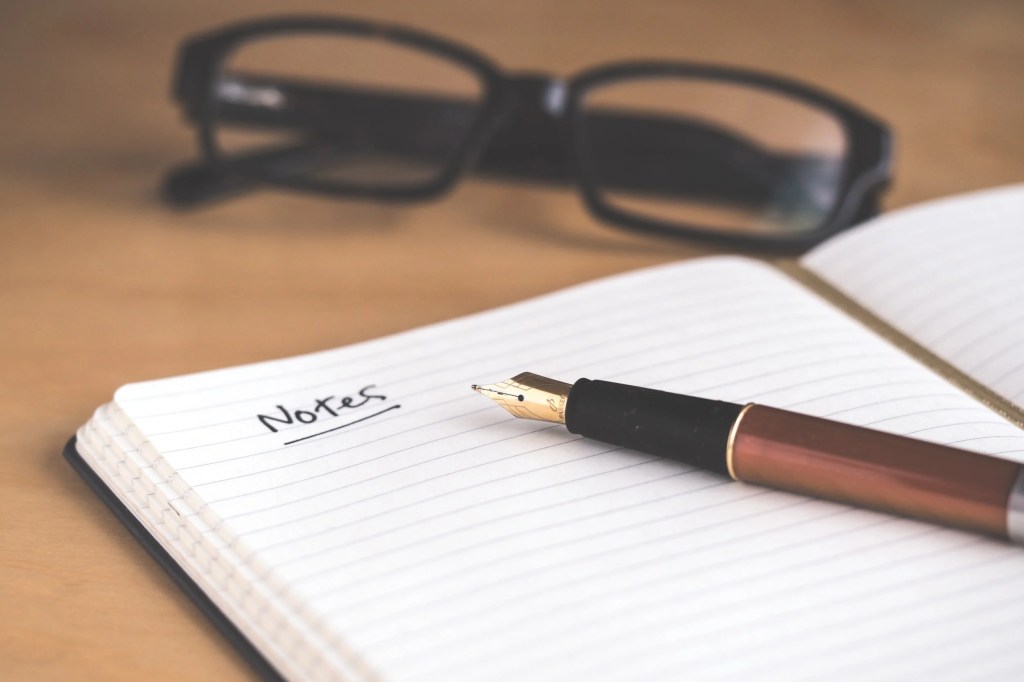
Let’s be real for a second: there are about a thousand different “aesthetic note-taking” videos floating around online, all with perfect pastel highlighters, 0.5mm pens, and handwriting that looks like it belongs in an art museum. Meanwhile, I’m just trying to get through APUSH without my notes looking like a chicken ran across the page. So, today I’m spilling the tea on how I actually take notes—and more importantly, how I keep them organized enough to actually use when it’s test time.
The Myth of Perfect Notes
Here’s the truth: the notes you take in class don’t need to be perfect. You don’t even need them to be pretty. What you do need is a system. My in-class notes are messy—like, arrows everywhere, stars around vocab words, random side doodles. They are not Instagram-worthy, and that’s fine. My brain is moving way too fast to worry about making every bullet point look cute in real time.
The trick is what happens after class.
Step One: The “Dump Notes”
In class, I call the notes I take “dump notes.” They’re basically just whatever the teacher says, whatever I read off the slides, or whatever I think I’ll forget five minutes later. It’s messy and chaotic on purpose—my only goal is to not lose important info.
I use either a spiral notebook or loose-leaf paper (depending on the class) because it lets me scribble without thinking. And I don’t stop to organize them—organization comes later.
Step Two: The Rewrite
Yes, I actually rewrite my notes. Not word-for-word, but I take those dump notes and rewrite them into something that looks like a clean study guide. Why? Because rewriting forces me to process the material twice. By the time I’ve reorganized it, I’ve already studied it.
This is where I’ll use colors, headings, and diagrams. It’s like taking a messy first draft and turning it into a polished version. For example:
- APUSH → timelines, vocab lists, cause-and-effect arrows.
- AP Chem → formulas written in boxes, practice problems underneath.
- AP Lang → main argument, rhetorical devices bulleted, little examples on the side.
By the end, each subject has its own “master notes” that actually make sense.
Step Three: The Binder (aka My Brain in Plastic Form)
I keep all my rewritten notes in binders—one per subject. Each binder is divided into units (because College Board loves units), and I stick my rewritten notes behind the matching tab. That way, when I’m studying for a unit test or the AP exam, I can just flip to exactly what I need instead of digging through old spirals like a gremlin.
And yes, I’m dramatic about my binders because they save my life every May.
Step Four: Digital Backup
If I’m really pressed for time (or if I don’t feel like lugging around a binder), I’ll type up key points in Google Docs or Notion. This is especially true for vocab or big-picture concepts. Having a digital backup means I can quiz myself on my phone or laptop.
I don’t go full iPad-notes-person, but I do use Quizlet for terms and formulas. Honestly, Quizlet is my ride-or-die for last-minute cramming.
The Organization Secret Nobody Tells You
Here’s the actual secret: the system only works if you stick to it. It doesn’t matter if your notes are color-coded or black pen on lined paper—what matters is that you go back to them. Notes are useless if they just live in a notebook and collect dust.
So, I try to:
- Rewrite within 24 hours (otherwise I forget half the context).
- File them in the binder as soon as I’m done.
- Use them for practice problems, flashcards, or quick reviews.
That way, my notes are living documents, not just random scribbles I never see again.
Final Thoughts
So no, my notes don’t look like Pinterest. They’re messy, rewritten, and then filed away in the nerdiest binder system you can imagine. But they work. They’ve gotten me through AP exams, DECA prep, and more late-night study sessions than I’d like to admit.
If you’re drowning in chaos right now, maybe try splitting your notes into “dump notes” (messy) and “rewrite notes” (organized). It takes extra time, but it saves so much stress when you’re actually studying.
Because at the end of the day, notes aren’t about being pretty—they’re about being useful.






 Mind & Medicine
Leave a comment